
Understanding Policing, Deadly Violence & Incarceration in Boston
Boston sits at the crossroads of nearly every major story about policing, incarceration, deadly violence, and community‑based safety in the United States. It is one of the oldest policing cities in the nation—home to early slave patrols, colonial night watches, and the country’s first municipal police force—yet it also brands itself as a national model for community policing and progressive criminal justice reform. This dual identity makes Boston a revealing place to study how law enforcement power was built, how it operates today, and how communities have long resisted and reimagined it.
Despite its reputation for innovation, Boston has some of the nation’s starkest racial disparities in homicide clearance, incarceration, and wrongful convictions. Neighborhoods like Roxbury, Dorchester, and Mattapan have endured decades of over‑policing alongside under‑protection, leaving hundreds of homicides unsolved and families without answers. At the same time, Boston has produced some of the country’s most influential community‑based responses to violence—from survivor‑led healing networks to abolitionist activism, justice coalitions, and jail‑based voting initiatives. These grassroots efforts show how residents create safety, dignity, and political power beyond traditional policing and punishment.
Yet very little of this history has been documented for public audiences, and almost none has been made accessible to people currently living in jails and prisons. In a city where deadly violence, food insecurity, and disenfranchisement shape daily life for many, there is a pressing need for a humanistic, transdisciplinary framework that brings together archival research, oral histories, community knowledge, and digital storytelling. Such a framework allows Boston’s true stories—of harm, resilience, and collective action—to be told with honesty and care, and to spark courageous conversations about what real public safety could look like in Boston and beyond.
Uplifting Healing Justice Frameworks for Community Safety
Healing justice, as defined by Cara Page and Erica Woodland, is a framework that understands healing as both a personal and collective process rooted in the long history of Black, Indigenous, and queer communities surviving systemic violence. It calls for addressing trauma at its political, spiritual, emotional, and structural roots—not just treating individual harm, but transforming the conditions that create it. Healing justice insists that communities most affected by violence already hold the knowledge, practices, and leadership needed to build safety, dignity, and liberation.
Source: Cara Page and Erica Woodland, Healing Justice Lineages: Dreaming at the Crossroads of Liberation, Collective Care, and Safety (North Atlantic Books, 2023).
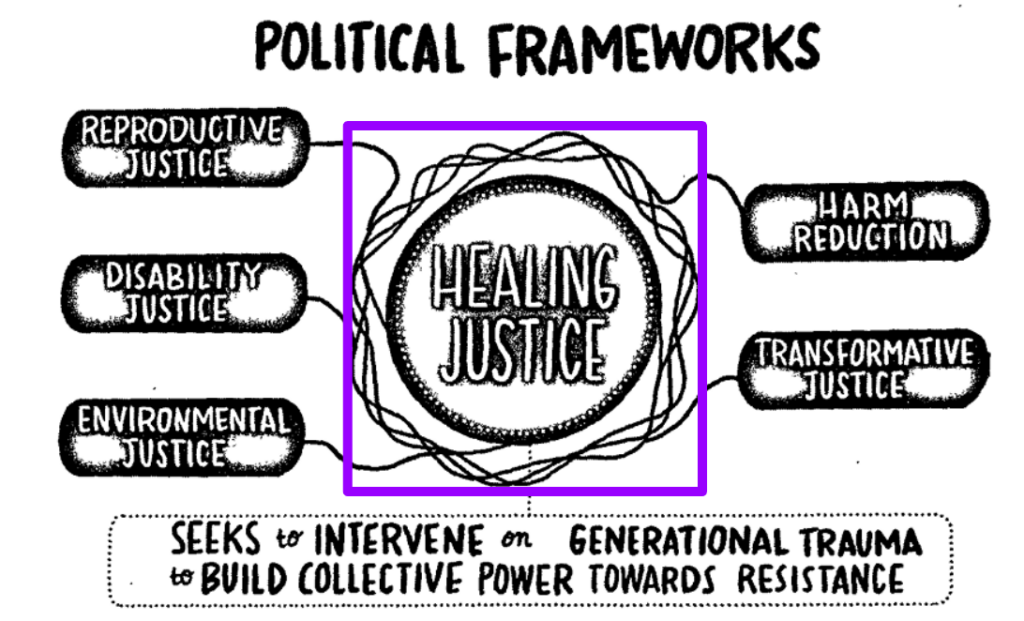
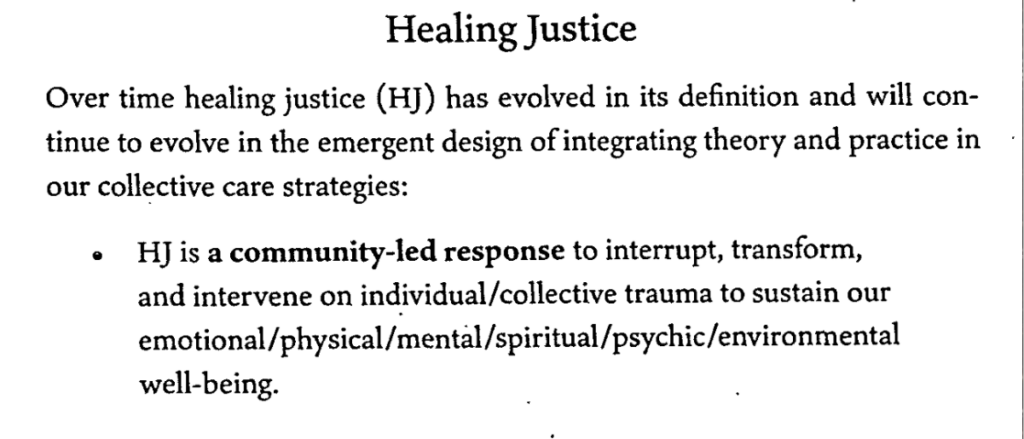
The Healing Justice framework guides the Building Beloved Communities (BBC) project by shaping how stories are gathered, interpreted, and shared. It pushes the project to look beyond crime statistics or institutional narratives and instead center the lived experiences of survivors, caregivers, organizers, and directly impacted residents. Through a healing justice lens, the BBC project examines public safety in Boston as a question of community well‑being, historical trauma, and collective solutions—not policing alone. It highlights how neighborhoods have created their own strategies for safety, food access, and civic power in the face of systemic neglect.
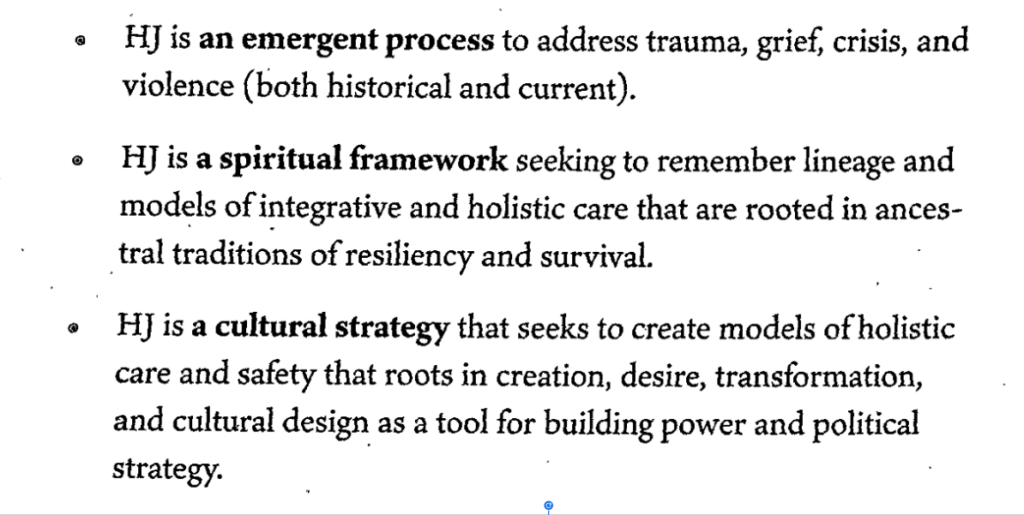
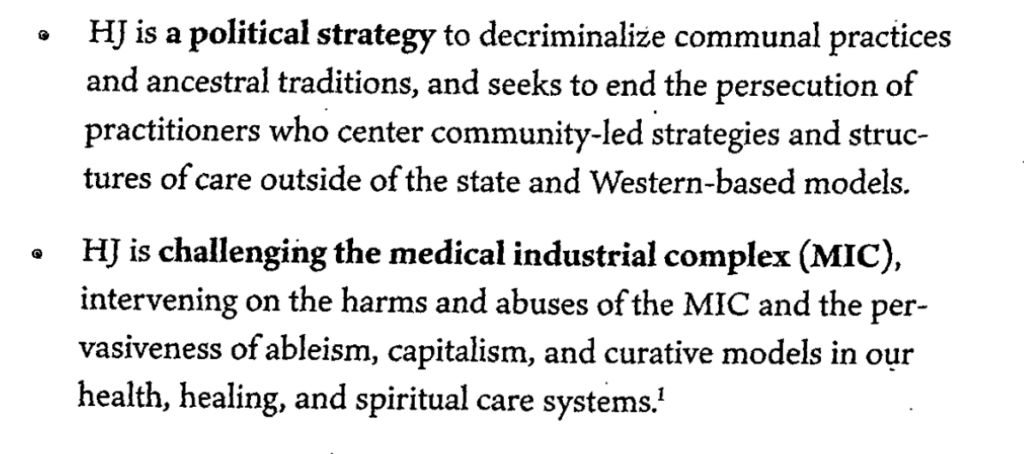
Healing justice also reflects the philosophy that animates Healing Our Land, Inc. (HOLI) and sister organizations across Boston. These groups ground their work in spiritual care, survivor leadership, mutual aid, and community‑rooted responses to harm. Their programs—whether supporting families after homicide, organizing jail‑based civic engagement, or building networks of care—embody the healing justice belief that communities can transform violence by strengthening connection, honoring grief, and building power together.
Featured Exhibits on Public Safety
As part of Dr. Cook’s OSU class in the Spring of 2026, the Unsolved Homicides Working Group focused on documenting deadly violence in Boston by gathering, organizing, and analyzing publicly available data on homicides and long‑ignored cases. Drawing on tasks outlined in the course materials, the group built spreadsheets of homicide databases from agencies such as the Boston Police Department, Massachusetts State Police, and the Suffolk County District Attorney’s Office, and reviewed newspaper archives connected to cases like the murder of Darlene Tiffany Moore and the wrongful conviction of Shawn Drumgold. They compared mainstream “true crime” narratives with community‑based storytelling models, especially HOLI’s radio broadcasts, to understand how different formats shape public understanding of violence. Over the semester, they drafted digital exhibit content, created zine pages for use in jail‑based education, and developed a script outline for a HOLI radio show on unsolved homicides. Their work contributes to the BBC project by making homicide data more accessible, humanizing the stories behind the numbers, and supporting community partners working to address violence and seek justice in Boston.
Documenting Data on Unsolved Homicides in Boston
Unsolved, But Not Forgotten
- The Louis D. Brown Peace Institute is a Dorchester‑based center for healing, teaching, and advocacy that supports families who have lost loved ones to homicide. Founded by Chaplain Clementina Chéry, the Institute provides trauma‑informed services, survivor leadership development, and community education aimed at transforming how Boston responds to murder, grief, and loss.
- The Unsolved But Not Forgotten Final Report (Revised 5.5.25) was researched and written by a team of first‑year law students at Northeastern University School of Law as part of the Legal Skills in Social Context program. Working under the supervision of Professor Andrew Haile, the student authors partnered with the Peace Institute and its Unsolved Homicide Ambassadors to document survivors’ experiences, examine Boston’s backlog of unsolved homicide cases, and elevate the voices of families seeking justice and accountability.
Community Stories from Survivors of Violence
The Unsolved But Not Forgotten report documents the experiences of survivors whose loved ones were killed in Boston and whose cases remain unsolved, revealing a consistent pattern of limited communication, long periods of silence, and deep emotional harm. The report centers the stories of Tasha Carrington, Mahogany Payne, Lisa Randolph, Nicole Bell, Juanita Batchelor, Shondell Davis, and Ms. Justice, each of whom describes years—sometimes more than a decade—without meaningful updates from the Boston Police Department. Survivors recount unanswered phone calls, unclear investigative steps, and the sense that their loved ones’ cases were deprioritized once labeled “cold.”
Across these cases, survivors describe the same two challenges: inadequate investigation and a lack of communication or transparency from law enforcement. Many note that detectives rarely reached out unless an arrest was made or a suspect died, leaving families to seek information on their own. Several survivors—like Tasha Carrington, who waited ten years before hearing from detectives—describe taking public action, speaking at community meetings, or turning to the press simply to prompt a response.
These stories collectively show how unsolved homicides create long-term trauma for families and how inconsistent communication practices deepen that harm. The report elevates survivors’ voices to show that behind every unsolved case is a family still waiting, still grieving, and still fighting to be heard.
Remembering Them: A Digitial History Exhibit of Unsolved Homicide Cases in Boston
Click on the green button below to explore a digital history webpage created by Les Shigley and Ezra Chomak of unsolved homicide cases in Boston documented by the Louis D. Brown Peace Institute and Northeastern University School of Law in 2025.
TAKE ACTION TO DEMAND TRANSPARENCY IN UNSOLVED HOMICIDE CASES
What step can you take today to push for greater data transparency around unsolved homicides—and help ensure that families, survivors, and communities are not left in the dark?
Across Suffolk County, the public still has no clear, accessible, up‑to‑date database showing how many homicide cases remain unsolved, where they occurred, or how long families have been waiting for answers. Even basic numbers vary across news reports and public statements, making it nearly impossible for residents to hold law enforcement accountable or to understand patterns of violence and investigative gaps. The Suffolk County District Attorney’s Office once launched the Project for Unsolved Suffolk Homicides (PUSH), but it reviewed only a limited set of cases and did not provide a public mechanism for families to request review or track progress. Without transparent data, survivors cannot advocate effectively—and communities cannot partner with investigators to help solve cases. Greater transparency is a first step toward accountability—and toward ensuring that every family’s loss is recognized, not forgotten.
Ways to support transparency and accountability include:
Calling for a public, searchable database of all unsolved homicides in Suffolk County, including case status, year, and neighborhood.
Contacting local officials—city councilors, state legislators, and the mayor’s office—to demand regular public reporting on homicide clearance rates.
Supporting survivor‑led organizations that advocate for transparency and justice in long‑term unsolved cases.
Sharing information about the scale of unsolved homicides to raise public awareness and build pressure for systemic change.
Attending community meetings or public hearings where homicide investigations, policing, and public safety budgets are discussed.
Advocating for legislation that requires law enforcement agencies to publish annual clearance reports and maintain open data portals.
Supporting Survivors of Community Violence & Caregivers Impacted by Incarceration
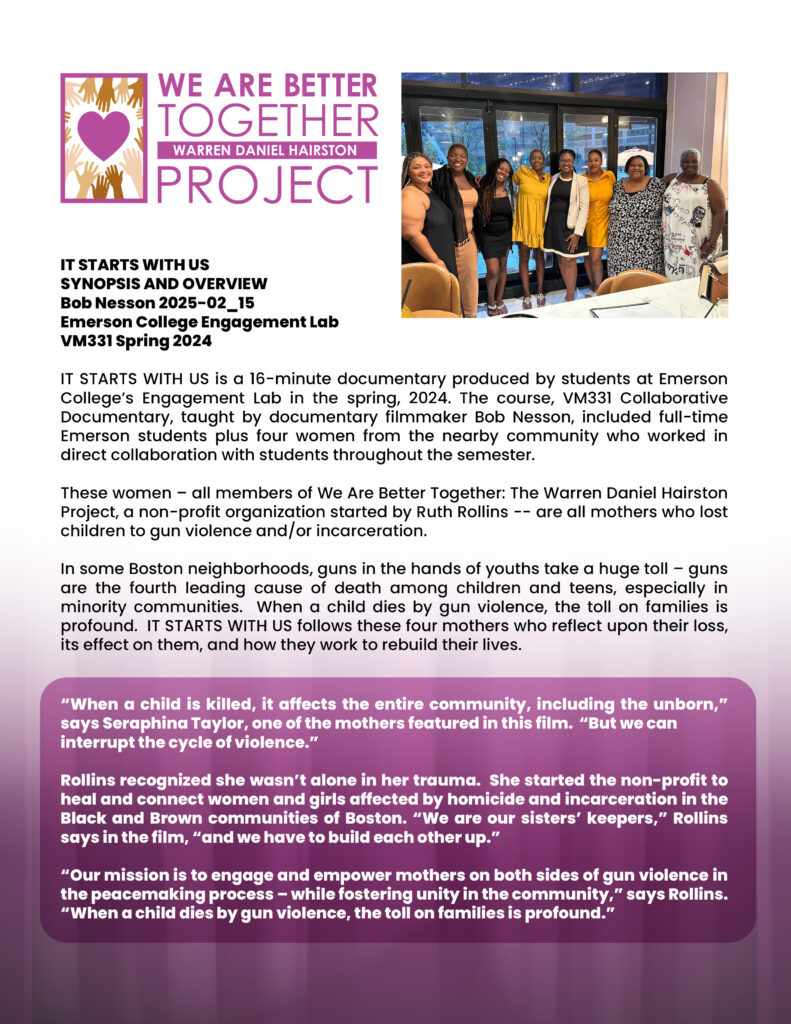
We Are Better Together (WAB2G) is a Boston-based healing and advocacy organization founded by Ruth Rollins to support families on all sides of community violence—those who have lost loved ones to homicide and those whose loved ones are incarcerated.
The organization grew from Ruth’s own experience navigating grief, stigma, and the deep structural harms that shape Black families’ encounters with violence and the criminal legal system.
Today, WAB2G brings together mothers, caregivers, and community members to break cycles of trauma through healing circles, reentry support, youth programming, therapy referrals, and practical assistance with food, transportation, and home needs. Their work centers the belief that safety and healing require supporting both survivors of homicide and families impacted by incarceration, recognizing that these experiences are interconnected and often rooted in the same systems of racism, neglect, and community harm.
Ruth Rollins’ Community Conversation with OSU Stdents in March 2026 (video clip coming soon) offered students a powerful, firsthand look at what it means to support families on all sides of community violence.
Drawing from her work with We Are Better Together and her own experience as a mother who has lost one son to homicide and another to incarceration, Ruth spoke about grief, stigma, and the structural barriers Black caregivers face when navigating schools, hospitals, prisons, and reentry systems. She emphasized the importance of healing justice, caregiver support, and community‑led responses to harm, inviting students to see public safety, food justice, and civic power through the lens of lived experience. Her conversation grounded the course in survivor‑centered knowledge and highlighted the leadership of women building pathways toward collective healing and accountability.
TAKE ACTION TO ADDRESS COMMUNITY VIOLENCE AND IMPACTS OF INCARCERATION
What step can you take today to stand with organizations like We Are Better Together—by supporting their healing work, amplifying their mission, or taking action against community violence in your own neighborhood?
Community organizations like We Are Better Together operate in a landscape where families impacted by homicide and incarceration often face deep stigma, limited support, and systems that were never designed with their healing in mind. Many caregivers describe feeling dehumanized in schools, hospitals, prisons, and courtrooms, and they carry the weight of grief, trauma, and structural racism while trying to keep their families safe. In the absence of consistent institutional care, groups like WAB2G step in to fill the gap—creating healing circles, caregiver support networks, reentry programs, and community‑led responses to violence that honor the full humanity of those most affected. Their work shows that real safety grows from connection, dignity, and collective action, not punishment or isolation.
Ways to support WAB2G’s Work include:
Donating to sustain healing circles, caregiver support, and reentry programs.
Volunteering your time or skills to assist with events, outreach, or resource distribution.
Sharing their mission on social media or within your networks to raise awareness.
Advocating for policies that support survivors, caregivers, and families impacted by incarceration and homicide.
Partnering with WAB2G through your school, workplace, or community organization to expand their reach.